
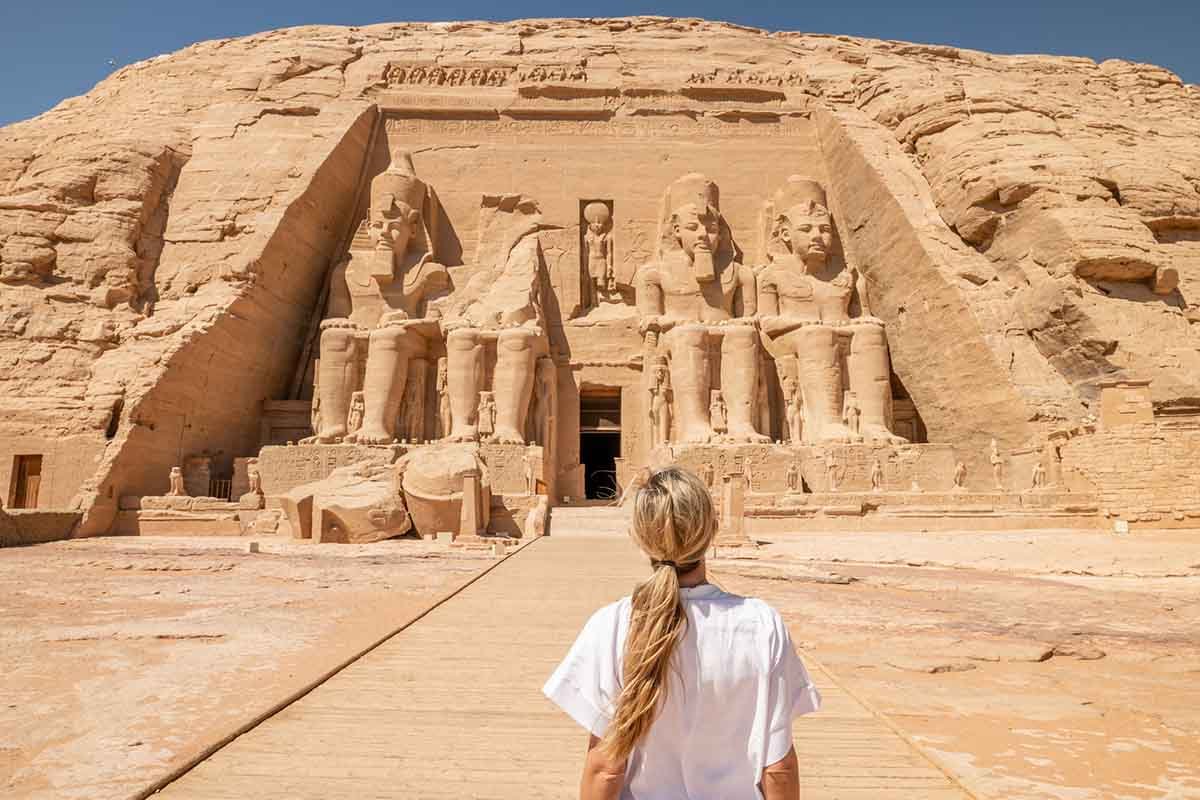
Visiting Abu Simbel from Aswan is one of the most popular excursions in southern Egypt. The two rock-cut temples of Ramesses II and Queen Nefertari stand near Lake Nasser, close to Egypt’s southern border, and are famous for their scale, history and remarkable relocation during the twentieth century.
Most travelers visit Abu Simbel as a day trip from Aswan. The main choice is between traveling by road and flying, and the better option depends on your budget, schedule, comfort preferences and current transport availability.
Why Abu Simbel Is Worth the Journey
The Great Temple is dominated by four colossal seated statues of Ramesses II, while the smaller temple is dedicated to Hathor and Queen Nefertari. The interiors contain reliefs and ceremonial spaces that reward more than a quick exterior photo stop.
The temples were moved to higher ground in an international rescue project connected with the creation of Lake Nasser. That history adds another layer to the site and is best understood with an Egyptologist guide.
Option 1: Abu Simbel by Road from Aswan
Road travel is the most common option. It usually involves a very early departure so visitors can reach the site in the morning and return to Aswan later the same day.
Advantages of Going by Road
- Usually more economical than flying
- Easy to arrange as a private trip
- Flexible pickup from your hotel or Nile cruise, subject to local operating rules
- Useful for families or small groups who prefer a private vehicle
Things to Consider
The road journey is long, so comfort matters. Choose an air-conditioned vehicle, carry water and light snacks, and be prepared for an early start. Current departure procedures can change, so confirm timing shortly before travel.
Option 2: Flying from Aswan to Abu Simbel
Flights can reduce road time and may suit travelers with limited time or those who prefer not to spend several hours in a vehicle. However, flight schedules and seat availability vary, and changes can affect same-day planning.
If flying is essential to your itinerary, allow some flexibility and confirm the latest schedule when booking.
How Long Do You Need at Abu Simbel?
Most visitors spend enough time to see both temples, walk around the exterior, enter the main chambers and listen to an explanation from their guide. Avoid rushing: details inside the temples are part of what makes the excursion worthwhile.
What to Bring
- Passport or identification required by your operator
- Water
- Hat and sun protection
- Comfortable shoes
- Light layer for an early winter departure
- Camera or phone, while following current photography rules
Can You Combine Abu Simbel with Other Aswan Attractions?
Because Abu Simbel is a substantial day trip, it is better not to overload the same day with too many Aswan sights. A practical plan is to dedicate one day to Philae Temple, the High Dam and a Nubian or felucca experience, then reserve a separate morning and day for Abu Simbel.
See our Aswan tours for private combinations and flexible itineraries.
Abu Simbel Before or After a Nile Cruise?
Both can work. If your cruise ends in Aswan, you can add Abu Simbel after disembarkation, provided your onward travel schedule allows enough time. If your cruise starts in Aswan, arrive at least one night earlier if you want to visit Abu Simbel without risking a rushed connection.
Saray El Nile can combine private transfers, Nile cruises and Abu Simbel planning into one itinerary.
Frequently Asked Questions
How do most people visit Abu Simbel from Aswan?
Most travelers choose either a road day trip in an air-conditioned vehicle or a short domestic flight, depending on schedules and budget.
Is Abu Simbel suitable for families?
Yes, but the early departure and travel time should be considered when planning with young children.
Can I visit Abu Simbel and return to Aswan the same day?
Yes. Same-day excursions are the standard way many travelers include Abu Simbel in an Aswan itinerary.