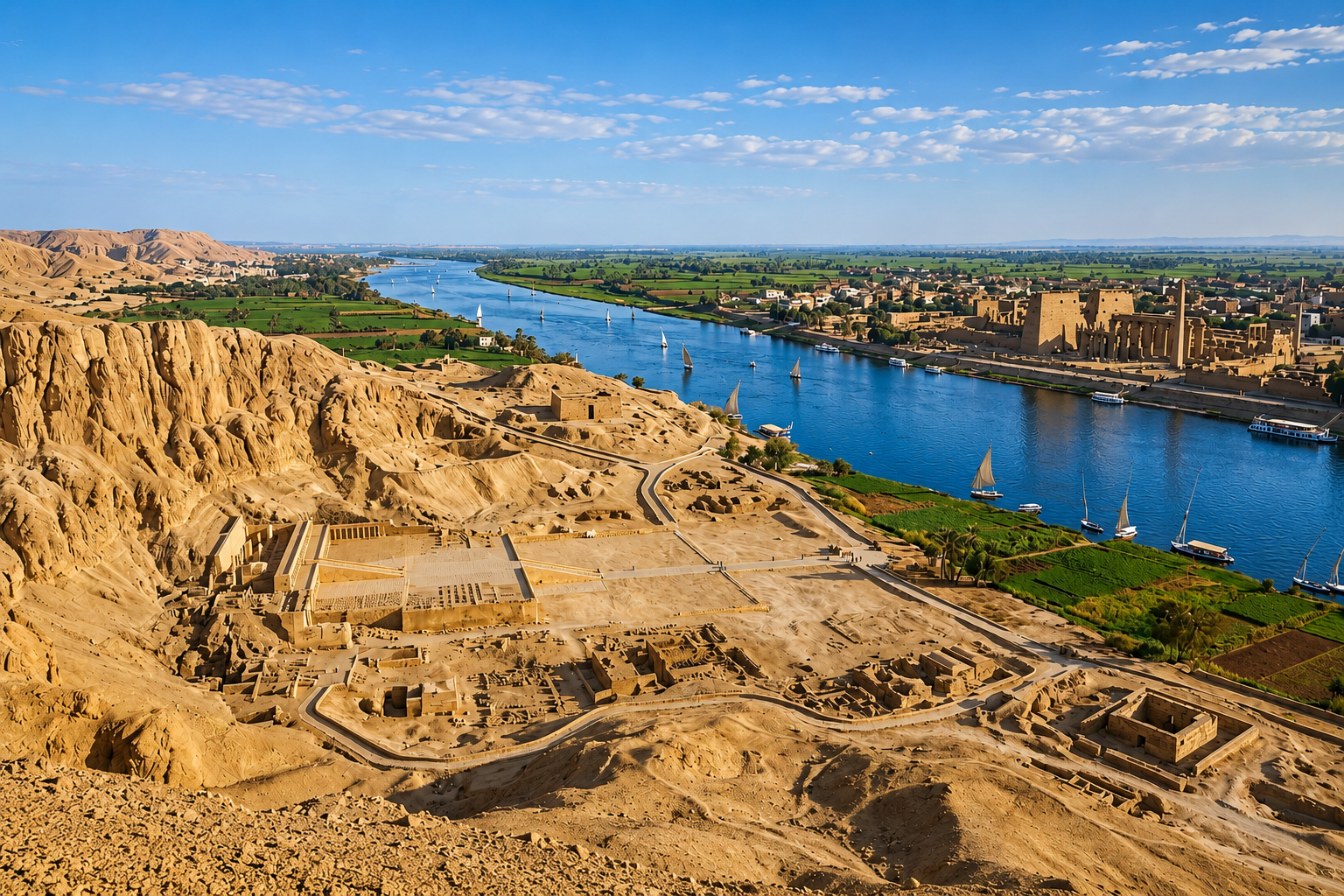
One of the first questions travelers ask is how to divide their time between the two sides of Luxor. Understanding Luxor East Bank vs West Bank makes itinerary planning much easier because each side offers a different perspective on ancient Thebes.
The East Bank is home to monumental temple complexes and much of modern Luxor, while the West Bank contains royal tombs, mortuary temples and ancient workers’ villages. Together, they form one of the world’s most extraordinary archaeological landscapes.
What Is on Luxor’s East Bank?
Karnak Temple
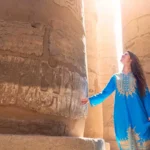
Karnak is the largest temple complex in Luxor and a highlight for first-time visitors. Its monumental pylons, courtyards, obelisks and the famous Great Hypostyle Hall reveal centuries of construction and religious importance. Give yourself enough time to walk beyond the entrance and explore the complex rather than treating it as a quick photo stop.
Luxor Temple
Luxor Temple sits closer to the center of the modern city and has a different atmosphere from Karnak. It is especially attractive in the late afternoon and evening when the monument is illuminated. The Avenue of Sphinxes historically connected Luxor Temple with Karnak.
Luxor Museum and Mummification Museum
Travelers interested in artifacts, sculpture and ancient Egyptian funerary practices can add one or both museums. They work well as flexible stops after the larger archaeological sites.
What Is on Luxor’s West Bank?
Valley of the Kings
The Valley of the Kings is the best-known royal burial ground in Luxor. Different tombs may be open at different times, and some special tombs can require separate tickets. Because conditions and access policies can change, confirm the current ticket structure before your visit.
Temple of Hatshepsut
Set dramatically against the cliffs of Deir el-Bahari, Hatshepsut’s mortuary temple is one of Luxor’s most distinctive monuments. Its terraces and axial design create a memorable contrast with the surrounding desert landscape.
Colossi of Memnon
The two monumental seated statues are a convenient short stop and an iconic West Bank landmark. They once stood at the entrance to the mortuary temple of Amenhotep III.
Medinet Habu, Valley of the Queens and Deir el-Medina
Travelers with extra time should look beyond the standard highlights. Medinet Habu is known for impressive reliefs and surviving architectural detail. The Valley of the Queens includes richly decorated tombs, while Deir el-Medina offers insight into the community of artisans who created royal tombs.
Which Side Should You Visit First?
If you have two days, a practical plan is to start with the West Bank early in the morning on day one, then dedicate day two to Karnak, Luxor Temple and museums on the East Bank. This reduces unnecessary crossing and gives each area enough time.
If you have only one day, a private tour can combine the key highlights on both sides. A common route includes the Valley of the Kings, Hatshepsut Temple, Colossi of Memnon, Karnak Temple and Luxor Temple.
Sample Luxor Itineraries
One Day in Luxor
- Early West Bank pickup
- Valley of the Kings
- Hatshepsut Temple
- Colossi of Memnon
- Karnak Temple
- Luxor Temple
Two Days in Luxor
Day 1: Valley of the Kings, Hatshepsut Temple, Medinet Habu and Colossi of Memnon.
Day 2: Karnak Temple, Luxor Temple, Luxor Museum and an optional sunset Nile experience.
Three Days in Luxor
Add Deir el-Medina, Valley of the Queens, Dendera Temple or a more leisurely museum and Nile schedule.
How to Get Around Luxor Efficiently
Luxor’s attractions are spread out, especially on the West Bank. Private air-conditioned transport is the easiest way to reduce waiting time and maintain a comfortable pace. It also allows you to adjust the sequence of sites around weather, crowds and your interests.
See Saray El Nile’s Luxor tours for private sightseeing options, or use our transfer services for hotel, airport and city transport.
East Bank or West Bank: Which Is Better?
Neither side is “better.” The East Bank is essential for grand temple architecture, while the West Bank is essential for tombs and funerary monuments. First-time visitors should experience both.
Frequently Asked Questions
Can I see both banks of Luxor in one day?
Yes, but it will be a full day. Private transport and a focused itinerary help you cover the main highlights efficiently.
How long should I spend on the West Bank?
Allow at least half a day for the core sites and a full day if you want to include Medinet Habu, Deir el-Medina or the Valley of the Queens.
Is Luxor Temple on the East Bank?
Yes. Luxor Temple and Karnak Temple are both on the East Bank.