A Nile cruise in Egypt is one of the most memorable ways to discover the country’s ancient history, breathtaking landscapes, and vibrant culture. Sailing between Luxor and Aswan allows travelers to explore magnificent temples and ancient monuments while enjoying comfortable accommodation and beautiful views along the world’s most famous river.
For travelers looking to combine Egyptian history, sightseeing, culture, and relaxation, a Nile cruise offers an unforgettable journey through the heart of the country.
Why Take a Nile Cruise in Egypt?
The Nile River has played a central role in Egyptian civilization for thousands of years. Ancient communities developed along its fertile banks, while temples, cities, and royal monuments were built close to the river.
Today, cruising along the Nile gives travelers a unique opportunity to follow the path of ancient history while watching traditional villages, green farmland, palm trees, and desert landscapes pass by.
Most Egypt Nile cruises travel between Luxor and Aswan, with several stops along the way. This makes it possible to visit some of Egypt’s most important archaeological sites without constantly changing hotels or arranging separate transportation.
Each day brings a new destination, making a Nile cruise both convenient and exciting.
Luxor: The Starting Point of Many Nile Cruises
Luxor is often the starting point for a Nile cruise and is one of the best destinations in Egypt for exploring ancient history. Often described as one of the world’s greatest open-air museums, Luxor is home to remarkable temples, tombs, statues, and archaeological sites.
Karnak Temple
On Luxor’s East Bank, travelers can explore the impressive Karnak Temple Complex. Its enormous columns, courtyards, obelisks, statues, and detailed hieroglyphs demonstrate the architectural achievements of ancient Egypt.
Karnak was developed over many centuries and became one of the most important religious centers of ancient Egyptian civilization.
Luxor Temple
Located in the heart of modern Luxor, Luxor Temple offers another fascinating look at ancient Egyptian religion and royal traditions.
The temple is particularly beautiful in the evening when its massive columns and statues are illuminated. Its historical connection to Karnak through the Avenue of Sphinxes makes it an important part of any Luxor sightseeing itinerary.
Exploring the West Bank of Luxor
The West Bank of Luxor contains some of Egypt’s most famous ancient treasures.
Valley of the Kings
The Valley of the Kings served as a royal burial ground for numerous pharaohs. Its decorated tombs contain colorful scenes and inscriptions that reveal ancient Egyptian beliefs about the afterlife.
The site is particularly famous for the tomb of Tutankhamun, whose discovery became one of the most celebrated archaeological discoveries in history.
Temple of Queen Hatshepsut
The nearby Temple of Queen Hatshepsut is one of Luxor’s most impressive monuments. Built into the cliffs of Deir el-Bahari, the temple is known for its distinctive terraces, columns, and reliefs.
Colossi of Memnon
The Colossi of Memnon are two enormous stone statues that once stood at the entrance to a large temple complex. Today, they remain one of the most recognizable landmarks on Luxor’s West Bank.
Together, these sites make Luxor one of the most important stops on a Nile River cruise in Egypt.
Edfu Temple: Discover the Temple of Horus
As the cruise continues south, one of the major stops is often Edfu. The Temple of Horus is one of the best-preserved ancient temples in Egypt and is famous for its massive entrance, detailed reliefs, and impressive interior halls.
Dedicated to the falcon-headed god Horus, the temple provides a remarkable insight into ancient Egyptian religious traditions.
Its excellent state of preservation allows visitors to appreciate the scale and craftsmanship of ancient Egyptian temple architecture.
Kom Ombo Temple: A Unique Nile-Side Monument
The next major stop on many Luxor to Aswan Nile cruises is Kom Ombo. Here, a unique temple stands directly beside the Nile.
The Temple of Kom Ombo was dedicated to two deities: Sobek, the crocodile god, and Horus the Elder. Its unusual symmetrical design reflects the temple’s dual dedication.
Visitors can explore detailed carvings, inscriptions, and reliefs that provide insight into ancient Egyptian religious beliefs and traditions.
The temple’s location beside the river also makes it one of the most scenic stops during a Nile cruise.
Aswan: The Peaceful End of the Journey
The cruise eventually reaches Aswan, a peaceful city surrounded by beautiful Nile scenery. Compared with the busy atmosphere of Cairo and some of Egypt’s larger cities, Aswan offers a more relaxed experience.
One of the city’s most important attractions is the Temple of Philae.
Temple of Philae
Located on Agilkia Island, the Temple of Philae is dedicated primarily to the goddess Isis. The temple complex is surrounded by the waters of the Nile, creating one of Egypt’s most beautiful settings for an ancient monument.
Reaching Philae by boat adds to the experience and provides wonderful views of the river and surrounding islands.
Experience Nubian Culture in Aswan
A Nile cruise is not only about ancient temples. Aswan also offers opportunities to experience modern Egyptian and Nubian culture.
Travelers can visit colorful Nubian villages, enjoy traditional felucca rides, explore local markets, and discover the unique traditions of southern Egypt.
These cultural experiences provide a pleasant balance between ancient history and modern Egyptian life.
Aswan High Dam
The Aswan High Dam is another important landmark in southern Egypt. Completed in the 20th century, the dam had a major impact on Egypt’s water management and helped create Lake Nasser.
A visit to the High Dam can be combined with other Aswan attractions, providing travelers with an opportunity to learn about an important chapter of modern Egyptian history.
Optional Abu Simbel Excursion
Many Nile cruise itineraries offer an optional excursion to Abu Simbel, located south of Aswan.
The magnificent rock-cut temples were commissioned by Ramses II and are famous for their enormous statues, detailed carvings, and impressive architecture.
The Great Temple is dedicated to Ramses II and features colossal statues at its entrance. The nearby temple was dedicated to Queen Nefertari and the goddess Hathor.
A visit to Abu Simbel adds another unforgettable chapter to a journey through ancient Egyptian history.
Life Aboard a Nile Cruise Ship
Life aboard the cruise ship is an important part of the experience. Modern Nile cruise boats generally offer comfortable cabins, restaurants, sun decks, swimming pools, and relaxing spaces where guests can enjoy the scenery.
After a morning of sightseeing, travelers can return to the ship, relax beside the pool, enjoy a meal, or simply watch the Nile landscapes pass by.
The combination of sightseeing and relaxation is one of the main advantages of choosing a Nile cruise in Egypt.
Enjoy the Scenery Along the Nile
One of the most beautiful aspects of a Nile cruise is the opportunity to experience Egypt’s changing landscapes.
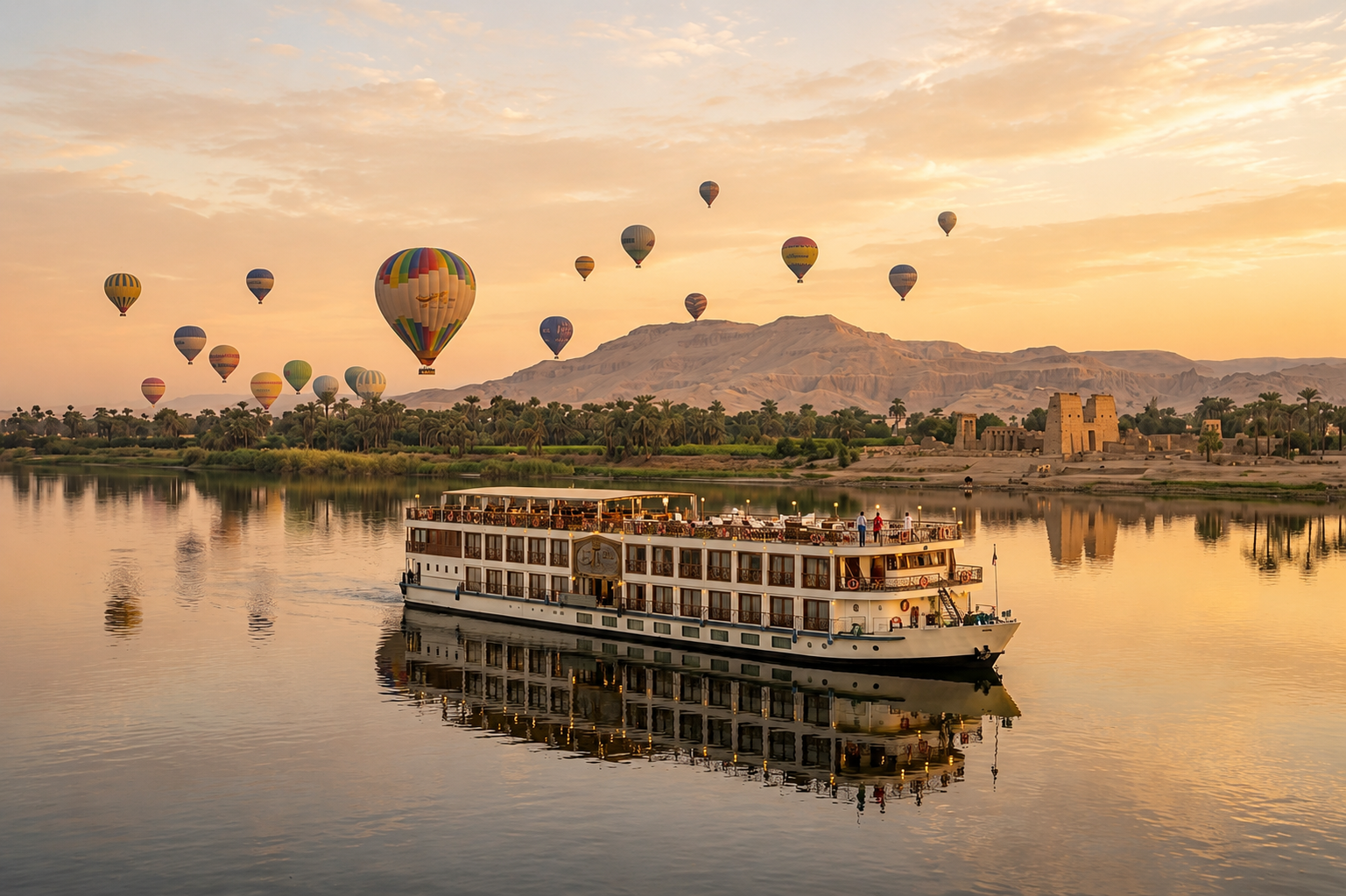
As the boat moves along the river, travelers can see green farmland, palm trees, traditional villages, agricultural areas, and desert landscapes.
The contrast between the fertile Nile Valley and the surrounding desert demonstrates the important role the river has played in Egyptian life for thousands of years.
Watch a Nile Sunset
One of the most memorable moments of a Nile River cruise is watching the sunset over the water.
As the sun disappears behind the desert and palm-lined riverbanks, the Nile takes on warm golden colors. These peaceful moments provide time to relax, take photographs, and appreciate the timeless beauty of the river.
For many travelers, watching the sunset from the cruise deck becomes one of the highlights of their Egypt trip.
Best Time for a Nile Cruise in Egypt
The best time to take a Nile cruise in Egypt is generally between October and April, when temperatures are more comfortable for sightseeing.
The cooler season is particularly suitable for exploring outdoor archaeological sites in Luxor, Edfu, Kom Ombo, and Aswan.
During the warmer months, temperatures can be higher, particularly during daytime sightseeing. However, Nile cruises operate throughout much of the year.
Because the cooler months are popular with international travelers, booking your cruise in advance is recommended, especially if you want a specific departure date, cabin category, or cruise ship.
What to Pack for a Nile Cruise
Packing for a Nile cruise is relatively simple. Travelers should consider bringing:
- Lightweight and breathable clothing
- Comfortable walking shoes
- Sunscreen
- Sunglasses
- A hat
- A camera or smartphone
- Swimwear
- A light jacket for cooler evenings
- Personal medications
- A reusable water bottle
Comfortable shoes are particularly important because many days include walking around archaeological sites and ancient temples.
How Long Is a Nile Cruise?
The length of a Nile cruise depends on the itinerary. Popular options include 3-night and 4-night cruises between Luxor and Aswan, while longer programs may combine a Nile cruise with Cairo, Abu Simbel, or a Red Sea destination.
A longer itinerary allows travelers to explore more attractions while enjoying additional time on the river.
Luxor to Aswan or Aswan to Luxor?
Both directions offer an excellent way to explore Egypt’s ancient sites.
A Luxor to Aswan Nile cruise usually begins with the major attractions of Luxor before continuing south to Edfu, Kom Ombo, and Aswan.
An Aswan to Luxor Nile cruise follows the same general route in the opposite direction.
The best option depends on your overall Egypt itinerary, flight schedule, hotel arrangements, and the cruise departure dates available.
Why Choose a Nile Cruise in Egypt?
A Nile cruise offers several advantages for travelers:
- Explore several ancient sites in one journey
- Travel comfortably between destinations
- Avoid changing hotels every night
- Enjoy beautiful Nile landscapes
- Combine sightseeing with relaxation
- Experience Egyptian and Nubian culture
- Enjoy meals and facilities aboard the ship
- Visit famous temples along the river
- Have the option to add Abu Simbel
The combination of convenience, history, scenery, and relaxation makes a Nile cruise one of the most popular ways to explore southern Egypt.
Final Thoughts
A Nile cruise in Egypt is much more than a boat trip. It is a journey through the heart of ancient Egyptian civilization, connecting some of the country’s most important temples, tombs, and historical sites.
From the magnificent temples of Luxor and the royal tombs of the Valley of the Kings to the beautifully preserved temples of Edfu and Kom Ombo and the peaceful landscapes of Aswan, every stop reveals another chapter of Egypt’s extraordinary history.
At the same time, the relaxing pace of the river allows travelers to enjoy traditional villages, green farmland, desert landscapes, beautiful sunsets, and modern Egyptian culture.
For travelers seeking history, culture, scenery, and relaxation in one unforgettable experience, a Nile cruise is one of the best ways to explore Egypt.
Sailing along the legendary Nile creates a unique connection between the ancient world and modern travel, turning every day into a new discovery and every sunset into a lasting memory.





Nemo enim ipsam voluptatem quia voluptas sit aspernatur aut odit aut fugit, sed quia consequuntur magni dolores eos qui ratione voluptatem sequi nesciunt.